
Why an advertising agency might recommend buying CTV directly
An agency should be able to tell you when its charges make going direct the better choice. We can.
Direct CTV buying can make sense when agency retainers, management fees, creative charges, or required spending commitments make the campaign difficult to justify. It can also make sense when your team already has the expertise to manage the work. But examine the agency’s compensation model before assuming those additional charges are unavoidable.
Being able to launch a campaign and being prepared to manage the investment are different things.
When someone asks whether they need an agency, I want to know what they need help accomplishing. The honest answer may be a full engagement, a limited assignment, or no agency involvement at all.
A good agency should solve a problem you actually have
If your team already understands its customers, continually produces effective creative, manages media intelligently, and evaluates business results, an agency needs to explain what it would add.
Access alone may not justify the relationship. Modern self-serve platforms provide targeting, campaign management, reporting, and automated optimization. Roku, for example, describes those capabilities in its Ads Manager documentation.
The agency’s contribution might be better buying terms, behavioral creative, experience across platforms, or help improving the conversion journey. But those contributions should be defined, not assumed because the word “agency” appears on the proposal.
You should be able to identify the gap, the work that will address it, and the evidence you will use to evaluate that work.
When direct buying is a sensible recommendation
Your team has an accountable campaign owner. Someone has the time and authority to review results, change the plan, and follow through. This responsibility is part of their job, not something squeezed between unrelated assignments.
Your creative is ready for television. The commercial gives the intended audience a compelling reason to care, addresses important hesitation, and makes the next step clear. It also works in the viewing environment you are buying.
Your test has a specific question. You know what you want to learn and what would justify continuing, changing, or stopping. A focused test on one platform can be easier to manage than a campaign with many moving parts.
Your measurement is connected to the business. Tracking works, your team understands the platform’s attribution rules, and you can compare reported conversions with qualified leads, orders, and customer acquisition economics.
Your existing arrangements are competitive. You have examined inventory, terms, compensation, and total costs. The agency has not demonstrated enough additional value to justify its proposal.
In those circumstances, direct buying can be a disciplined business decision.
When agency charges tilt the decision toward direct buying
Retainers, management fees, separate creative charges, and required spending commitments can materially change campaign economics. Before the campaign produces its first customer, there are additional costs to recover. For a smaller test, those costs can be enough to make direct buying the better choice.
Distinguish an agency’s spending requirement from a minimum imposed by the platform or publisher. Ask who requires the commitment, what it buys, and whether it is appropriate for your test. A low platform entry requirement makes it easier to start; it does not guarantee enough evidence to make a sound decision.
Sometimes the next dollar belongs in a stronger offer, better creative, or a landing page that converts more effectively. Buying more exposure before addressing those problems can make an existing weakness more expensive.
If the agency cannot substantiate value sufficient to justify its additional costs and commitments, direct buying deserves serious consideration. Sometimes waiting until the creative, offer, or response path is ready is better than either option.
You may need expertise without needing a full agency engagement
An internal team can be strong in media management and weaker in creative. Another may have excellent creative but need help interpreting measurement or improving lead follow-up.
Those are opportunities for a focused assignment: evaluate the commercial, develop a behavioral creative test, review the customer journey, or design a measurement plan.
Your team can retain the platform account and manage the campaign while engaging outside expertise for a defined problem. Agree on deliverables, account access, ownership, and who implements the recommendations.
The arrangement should fit the need. You should not have to purchase an entire service package to solve one specific problem.
What changes when the agency does not charge those fees?
ADcology does not charge retainers, management fees, or separate creative fees. We earn commissions on the media we place. That means a comparison based on adding those fees does not describe our model.
Outside defined test campaigns, commissions are earned on placements and are not waived when results fall short. Rebooking, however, hinges on performance. Our opportunity to earn continued commissions depends on results that justify further media investment.
That is a business incentive to improve the message, buying, and conversion, not a performance guarantee or a claim that our work has no compensation cost.
Ask how commission is incorporated into the media price and compare the total proposal. The useful question is what expertise, creative, buying leverage, and ongoing support you receive for the complete investment.
Is your team ready to buy CTV directly? A readiness checklist.
Before committing, ask your team these questions. A confident “yes” should be supported by a person, a process, or evidence and not enthusiasm alone.
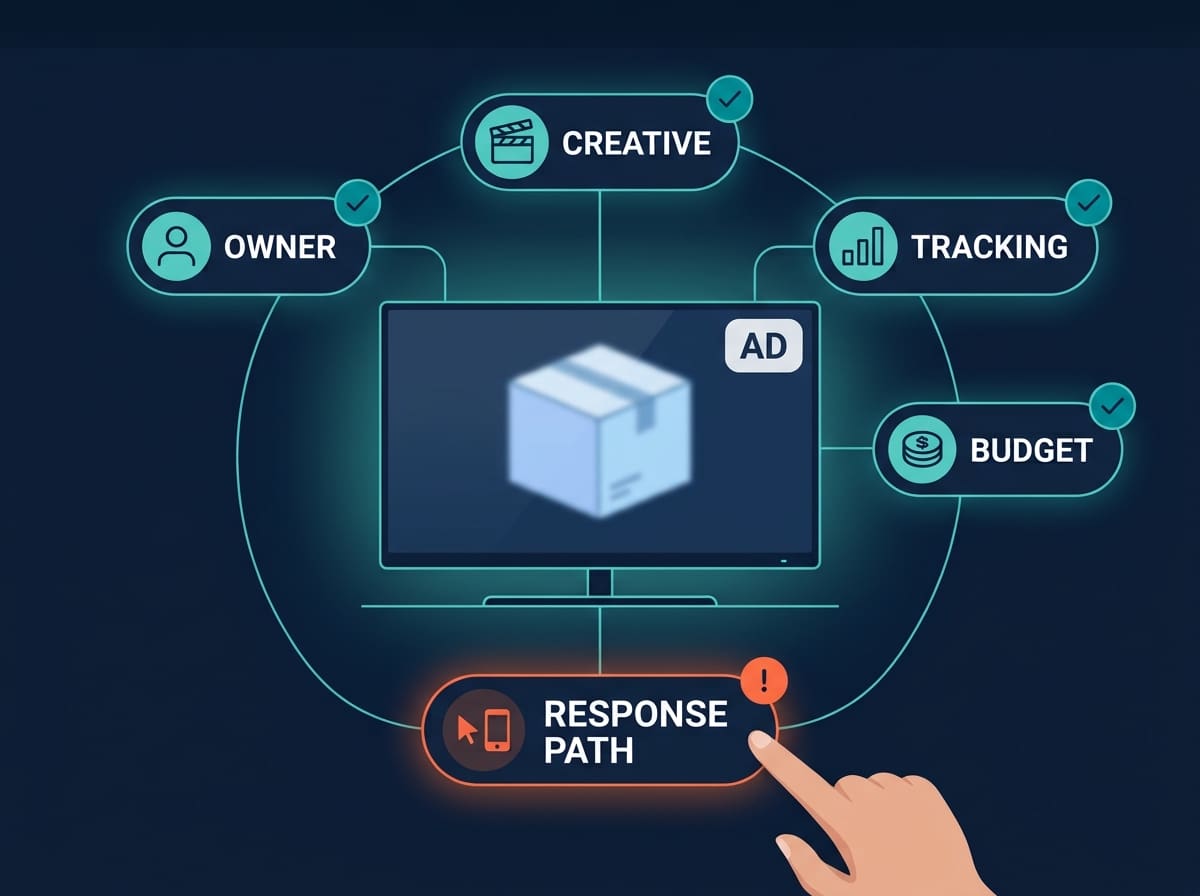
- We have a named owner with time to manage the campaign.
- We know the customer’s motivation and the resistance our message must address.
- Our commercial is ready, and we have a plan for testing creative alternatives.
- We understand the inventory, targeting, reporting limits, and buying terms.
- Tracking is configured, and we understand which events count as conversions.
- We can evaluate qualified leads, acquisition costs, and margins rather than just impressions.
- Our response path works: landing page, checkout, calls, and follow-up.
- We have a budget, review dates, and criteria for changing or stopping the test.
If you can substantiate these answers, direct buying deserves serious consideration. If several are unresolved, identify the gaps before spending. The checklist is a discussion tool, not a validated scoring system.
What an agency should tell you before you hire it
Ask: What will you do that we cannot currently do well? How are you compensated? What buying benefits can you substantiate? What will we review together? What happens if the first test disappoints?
Specific answers matter. “We will optimize your campaign” is less useful than explaining which decisions the team will make, which evidence it will review, and how often it will meet with you.
Also clarify who owns the account and creative, what reporting you receive, and how the relationship ends if it no longer serves the business.
Good collaboration begins with clear expectations.
Our starting point is the customer’s decision
At ADcology, psychology is central to the work. We ask why a customer would act and why that same customer might hesitate. We connect those questions to creative, media, and the economics of the response.
If your team already does that well, you may need less support. If the answers are unclear, a platform’s convenience will not supply them automatically.
Send us the commercial you plan to run. Our creative review can help identify audience alignment, resistance triggers, and fit with the intended media environment. If it is strong, we will tell you. If we see a gap, you will have a more concrete basis for deciding what help you need.
For the broader comparison of capabilities, buying leverage, and collaboration, read our article Self-serve CTV platform or advertising agency? How to decide. You can also see how we approach TV and CTV advertising.
